
On the final day of our trip, still in the heart of Budapest, we set out early in the morning towards Városliget Park, where we visited the enchanting Vajdahunyad Castle. Originally built in 1896 for Hungary’s Millennial Exhibition, the castle is a stunning blend of architectural styles, inspired by famous buildings from across the country. Surrounded by gardens and a peaceful lake, it provided the perfect backdrop for a last glimpse of Budapest’s charm. From there, we made our way to the city’s famous thermal baths — an iconic part of Hungarian culture, with roots dating back to Roman times and later perfected by the Ottomans. Known for their mineral-rich waters, these baths are not only a place for relaxation but also for socializing and experiencing a unique aspect of the nation’s heritage. Immersed in the warm pools, surrounded by elegant architecture and the soothing atmosphere, we embraced the chance to unwind and make the most of our last day in complete tranquility. After this moment of peace, we headed to the airport, bringing our unforgettable journey to a close, carrying with us countless memories and cultural experiences from our time in Budapest.
History, Tradition and Heritage in Budapest: A Journey Through Hungarian Identity
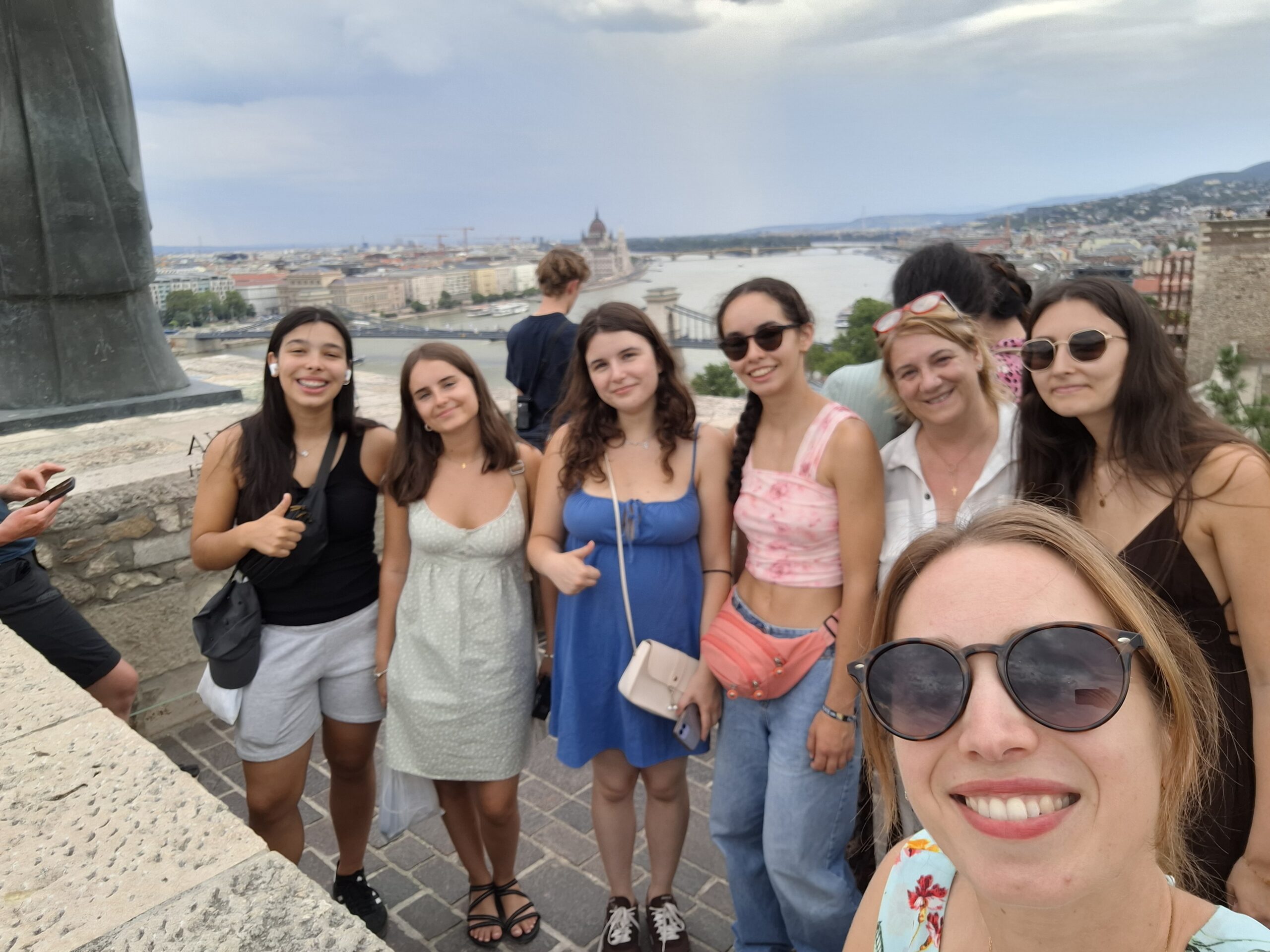
On the ninth day of our trip, we continued to explore the vibrant city of Budapest, diving deeper into its rich cultural, historical, and architectural heritage. The day began with a stroll through the city streets, where classical charm blends harmoniously with modern life. In the morning, we visited the Hungarian National Museum (Magyar Nemzeti Múzeum), a landmark institution founded in 1802 that preserves centuries of the country’s history and identity. There, we had the chance to learn about Hungary’s political, social, and cultural evolution — from the origins of the Magyar people, through the medieval period and Ottoman rule, to the 1848 Revolution, the communist era, and the transition to democracy. The museum’s permanent exhibition features archaeological artifacts, everyday objects, artworks, and historical documents that offer a comprehensive view of Hungary’s role in European history. After the museum, we headed to the Great Market Hall (Nagyvásárcsarnok), the city’s largest and oldest indoor market. Inside, we discovered a wide variety of traditional Hungarian products — from spices like the famous paprika, to sausages, dried fruits, artisanal cheeses, and local sweets. The upper floor was filled with craft stalls, embroidered goods, souvenirs, and small food stands where we could try authentic dishes like lángos and gulyás. Crossing the iconic Széchenyi Chain Bridge, we made our way to the Buda side of the city, known for its hills and peaceful, historic atmosphere. We climbed up to the Castle District, where we visited several of its impressive religious monuments, including Matthias Church — famous for its colorful tiled roof — and enjoyed the panoramic views from the Fisherman’s Bastion, one of Budapest’s most photogenic spots. Before dinner, we still had time for a quick stop by the exterior of the Hungarian Parliament — one of the country’s most iconic landmarks. Located on the banks of the Danube River, its neo-Gothic architecture is equally breathtaking during the day and when beautifully lit at night. To end the day, we had dinner at Szimpla Kert, one of the city’s most famous ruin bars, which also functions as a multicultural café. The place itself is a symbol of Budapest’s alternative culture and creative spirit: a space where locals and travelers from all backgrounds come together. This day was a true celebration of Hungarian culture, tradition, and heritage — and another meaningful step on our journey of cultural discovery and inclusion.
Inclusion, Cinema and Cultural Exchange in Budapest with the MIRA Association
On the eighth day of our intercultural journey, we said goodbye to the city of Prague early in the morning and boarded a train heading to Budapest. Upon arrival in the Hungarian capital, we went straight to a meeting with the MIRA Association, a non-profit organization that supports migrants and refugees in their social and cultural integration in Hungary. We were warmly welcomed with coffee, biscuits, and friendly smiles, followed by an informative presentation about the association and its various programs. MIRA runs several initiatives designed to help people from different backgrounds adapt and feel included in Hungarian society. Among these are the Family Program, which supports migrant families in adjusting to their new environment; the Outdoor Program, which promotes connection with nature through outdoor activities; and the Women’s Program, which provides specific support for migrant women through empowerment sessions, skill-building workshops, and community dialogue. In addition, the association regularly organizes cultural events, language classes, and community-building initiatives to encourage intercultural exchange and belonging. Later in the evening, we had the chance to take part in one of MIRA’s most inspiring activities: Movie Night. Together with participants from different nationalities — including China, Lithuania, and Hungary — we watched the classic film Dead Poets Society. After the screening, we engaged in an open discussion, sharing our thoughts and emotions about the movie in a welcoming and respectful atmosphere. We ended the day with a group dinner, reflecting on how each experience of this journey has contributed to expanding our perspectives and deepening our understanding of the values of inclusion.
A Day in Prague: Learning from the Past, Building an Inclusive Future
On the seventh day of our journey, we started our morning in Prague with eager anticipation. The day began with a meaningful and eye-opening visit to the SIMI association (Association for Integration and Migration), where we had the opportunity to learn about their essential work with migrants and refugees. During an engaging interview, representatives from SIMI shared how their organization supports migrants in integrating into Czech society. They offer legal assistance, language courses, psychological support, and various educational programs aimed at helping newcomers find employment and housing. Beyond the practical support, SIMI also promotes cultural exchange and mutual understanding through community events and intercultural dialogue. Their mission embodies the core values of inclusion, respect, and human dignity — values that are essential for building cohesive and empathetic societies. Following this enriching moment, we set off to explore the historical and cultural heart of Prague. We visited several religious sites that reflect the city’s multicultural heritage, including Protestant churches and Jewish synagogues, highlighting Prague’s long-standing religious diversity and the coexistence of different beliefs through centuries. We wandered through the Old Town Square, a vibrant area rich in Gothic and Baroque architecture. Here, we admired the world-famous Prague Astronomical Clock, a medieval masterpiece that has fascinated visitors since the 15th century. In the afternoon, we visited the Museum of Torture, which offered a darker insight into historical methods of punishment, reminding us of the importance of human rights and the value of empathy and justice in modern society. We also passed by the Franz Kafka statue, a tribute to the renowned writer born in Prague. Kafka, best known for works such as The Metamorphosis and The Trial, explored themes of alienation and identity — issues that still resonate today in conversations about migration and inclusion. We ended the day with a walk across the Charles Bridge, one of the most iconic landmarks in Prague. This historic bridge, adorned with statues of saints, connects the Old Town to the Lesser Town and offers breathtaking views of the Vltava River. As we crossed, we reflected on the many cultures, peoples, and stories that have shaped this city. Our final stop was the Jewish Quarter (Josefov), a deeply significant area that bears witness to the rich Jewish history of Prague. Here, we saw preserved synagogues and the Old Jewish Cemetery — a silent yet powerful reminder of the community’s resilience, suffering, and contributions throughout centuries. Throughout the day, every experience — from the morning interview to the historical sites — allowed us to reflect more deeply on the importance of cultural understanding and inclusion. Prague, with its layered history, diverse communities, and ongoing efforts to support integration, offered us not just beautiful views, but also meaningful lessons about empathy, respect, and the human spirit.

Between Palaces and Parks: A Day Devoted to Culture and Openness
On the sixth day of our trip, still in the majestic city of Vienna, we continued our cultural exploration by visiting some of the most iconic landmarks of the Austrian capital. The day began with a visit to the Hofburg Palace, the former seat of the powerful Habsburg dynasty and currently the residence of the Austrian president. Walking through it was like stepping into European history, where art, diplomacy, and power once intertwined. Next, we passed through the Stadtpark, one of Vienna’s most beautiful green spaces, renowned for its sculptures of classical music legends such as Johann Strauss. This park, open to all, also symbolizes the importance of public spaces in fostering inclusion and well-being, offering a place where different cultures, generations, and backgrounds meet peacefully. Our final visit was to the Belvedere Palace, a true Baroque masterpiece. More than that, the Belvedere stands as a symbol of democratic access to culture, welcoming people from all over the world and encouraging dialogue between the past and the present, tradition and diversity. After these enriching experiences, we had lunch and boarded the train to the next destination of our journey: Prague, the capital of the Czech Republic. Upon arrival, we had dinner and rested, ready for another day of cultural discovery.

Promoting Cultural Inclusion in Vienna
29th of July, 2025 On the fifth day of our Interrail journey, we arrived in Vienna at around 1 p.m, went to our hostel and then we had lunch. After, we headed to the concretization of our principal goal in the city: a meeting with a representative from the association “Hunger auf Kunst und Kultur” (“Hunger for Art and Culture”). The meeting was highly interactive, with input from both sides. The representative explained the main goals and structure of the initiative, which aims to make cultural life accessible to people with low income or health issues. Through a special card provided by social services, individuals in need are granted free access to cultural activities, such as theatre, cinema, festivals, museums.So far, over 53,000 cards have been distributed in Vienna alone, in cooperation with a wide network of institutions. One of the highlights of the project is its partnership with Caritas, which allows people with reduced mobility to enjoy the same cultural rights as others. Despite its success, the organization aims to expand further and bring culture to more people in vulnerable situations. After the insightful meeting, we explored some of Vienna’s cultural landmarks. We visited the Burggarten, a historical garden where we found the Mozart monument: a tribute to one of the most influential composers of classical music and a symbol of Austria’s rich musical heritage. Nearby stands a statue of Emperor Franz Joseph I, reflecting Austria’s imperial past. We then continued to the Vienna State Opera, one of the world’s most prestigious opera houses, known for its artistic excellence. Finally, we visited St. Stephen’s Cathedral, the spiritual heart of Vienna. With its Gothic architecture and rich history, the cathedral remains a free public space where people of all backgrounds can gather, pray, or simply admire its beauty. There, we hear music coming from an organ, played in real time.In the evening, we had dinner and returned to our accommodation, filled with inspiration from a city that clearly values inclusion through culture.
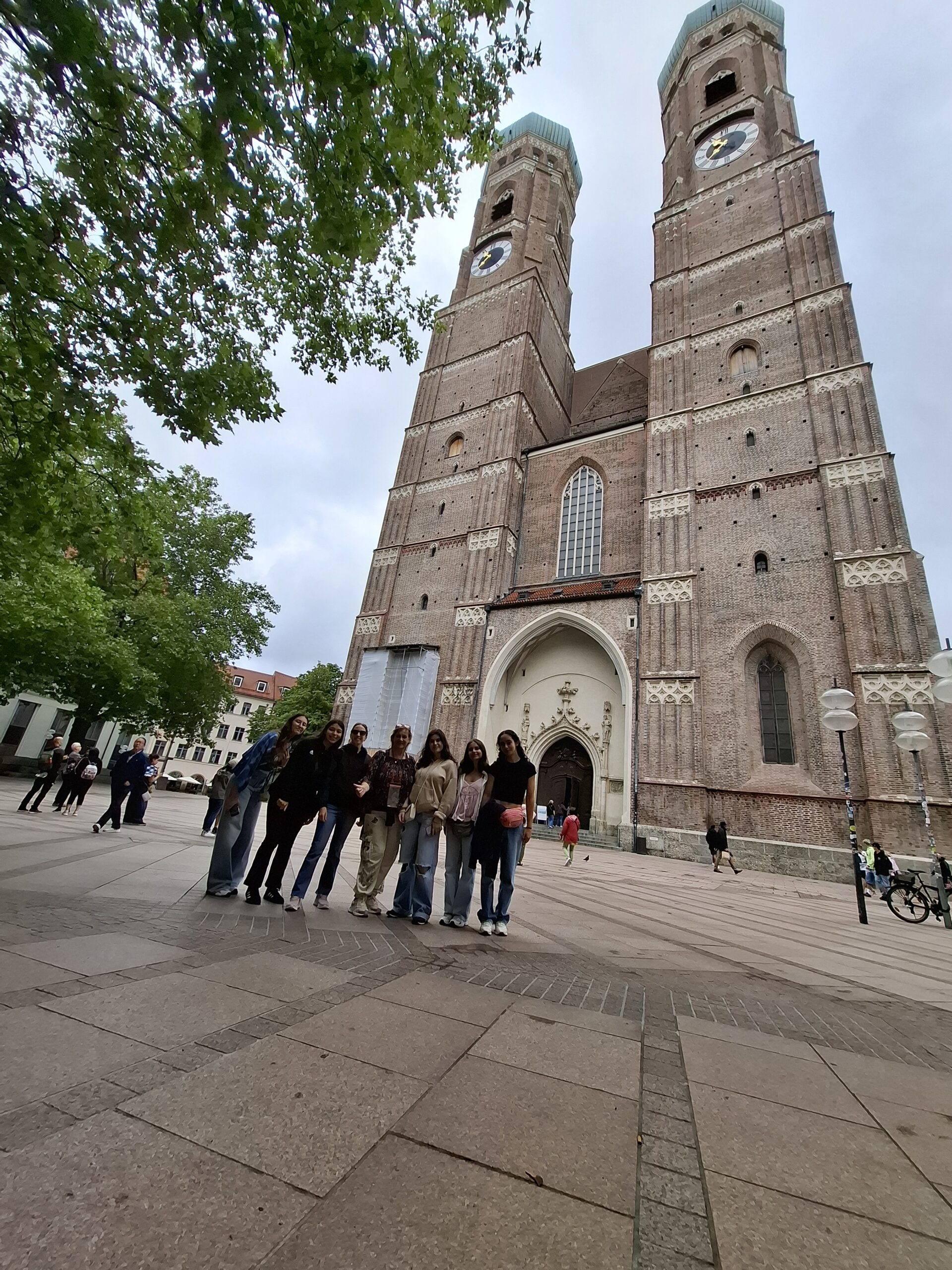
A Journey Through Culture, History, and Inclusion in Munich
On the fourth day of our journey, July 28, we began the morning with an unexpected but enriching encounter. While heading out for breakfast, we met a Portuguese migrant living in Munich who kindly offered to show us around the city. His personal perspective gave us a deeper understanding of life as a migrant and the importance of community support and inclusion. During the tour, we visited several key landmarks, including the Palace of Justice, Karlsplatz, and Munich’s City Hall. Our exploration also brought us closer to the city’s religious heritage, with visits to iconic places of worship such as St. Michael’s Church and the famous Frauenkirche—Munich Cathedral—known for the mysterious “Devil’s Footprint.” Later in the morning, we visited the Residenz München museum, one of the most significant cultural sites in the city. Formerly the royal palace of the Wittelsbach monarchs of Bavaria, the Residenz is the largest city palace in Germany. It offers a remarkable collection of rooms, artworks, and historical artifacts that showcase the evolution of German art, architecture, and royal life over the centuries. The museum gave us a unique insight into how culture, power, and identity were expressed throughout history. After lunch, we made our way to the “Spielplatz” to attend a cultural event called Kulturstrand, which aimed to promote music, art, and sports as forms of expression and unity. Unfortunately, no activities were taking place at the time, due to the bad weather, so we continued to our next destination—Bellevue di Monaco. Bellevue di Monaco is a non-profit residential and cultural center in central Munich, dedicated to supporting refugees, migrants, and asylum seekers through a wide variety of social and educational initiatives. Founded in 2015 as a civil society response to the refugee crisis, Bellevue emerged from a grassroots movement that brought together local residents, artists, activists, and city officials. The project successfully prevented the demolition of three historic buildings and transformed them into a welcoming space focused on dignity, empowerment, and community. Today, Bellevue di Monaco houses over 40 refugees and offers a rich program of activities designed to promote integration and intercultural dialogue. These include free German language courses, tutoring for children and teenagers, legal and psychological counselling, professional orientation workshops, and cultural events such as art exhibitions, film screenings, concerts, and public debates. The center also assists with basic needs such as food support and help in filling out essential administrative documents, which is crucial for those navigating a new country with limited resources or language skills. A team of volunteers and professionals is always available to help migrants understand bureaucratic procedures, access healthcare, and apply for legal status or work permits.In addition, the in-house café—run by a diverse team of refugees and volunteers—not only provides affordable meals but also functions as a space for integration, offering training and employment while encouraging informal exchanges between locals and newcomers. Bellevue di Monaco stands as a living example of how cities can embrace diversity, build bridges between cultures, and ensure that no one is left behind. In the evening, we wrapped up our day with a traditional dinner at Hofbräuhaus, a famous Bavarian beer hall known for its lively and inclusive atmosphere. There, we had the chance to taste authentic German beer. Alongside the beer, we enjoyed freshly baked pretzels and traditional Bavarian dishes, all while listening to live folk music that made us feel fully immersed in the local culture.After this vibrant evening, we returned to our apartment to rest and recharge for the next day, when a new destination awaited us.
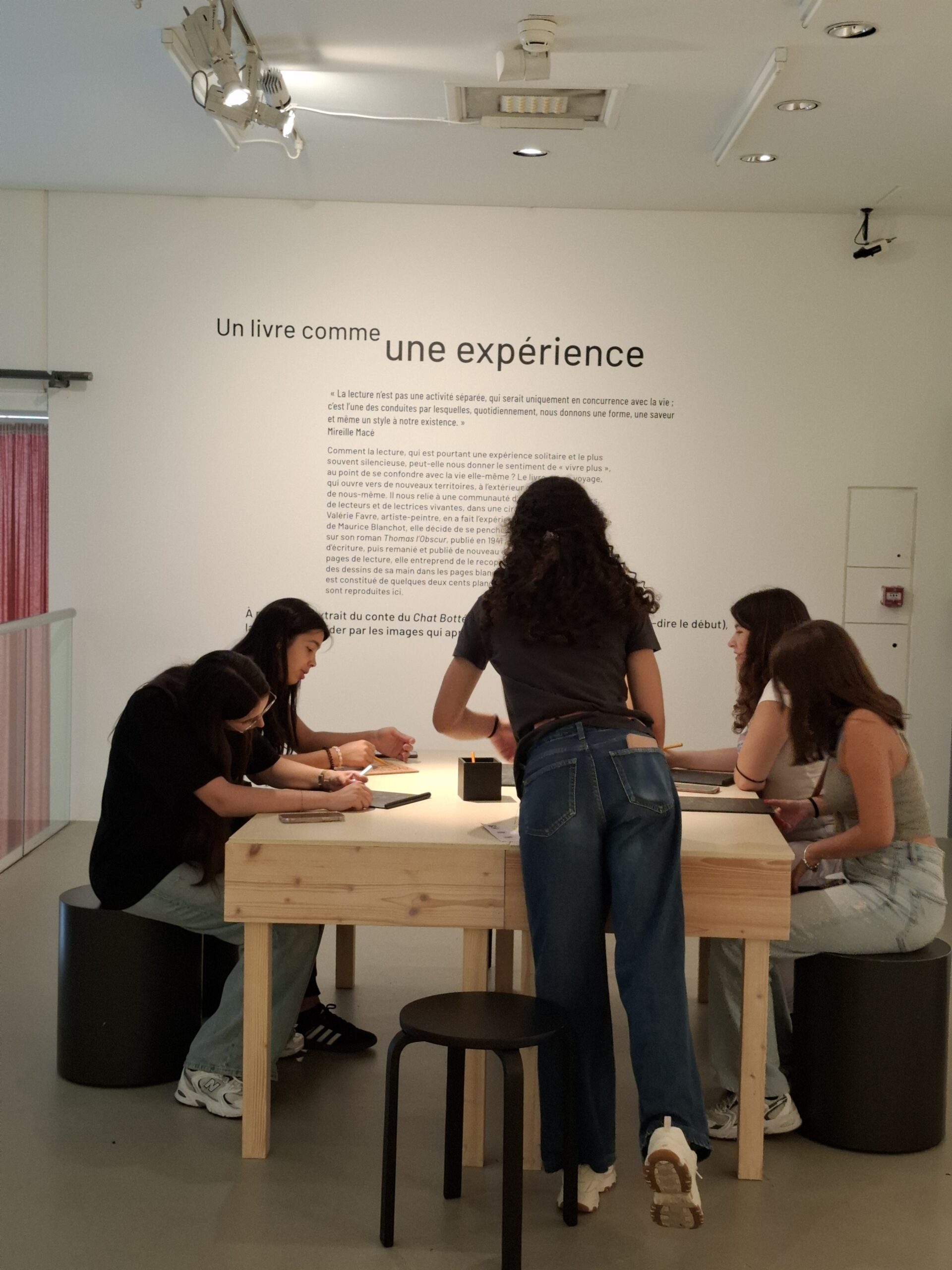
A Day in Strasbourg: From Refugee Stories to Artistic Discoveries
On the third day of our trip, July 27th, we set out in the morning to explore the city.Our first destination was the “Parc du Heyritz,” a place that turned out to be particularly special. It was there that we had the opportunity to come into contact with a group of refugees who are camping in the park. In order to learn more about their situation, we spoke with a police officer who was patrolling the area. Here is the short interview we had with him: Us: Good morning, we noticed that there are people camping here and we’d like to understand why they are here. Police officer: Good morning, these people are refugees who have nowhere else to go. Us: And where are they from? Officer: From various places, mainly Kazakhstan, Syria, Afghanistan, among others. Us: And do they receive any help? O: Yes, they do. There are institutions helping them integrate and looking for housing for all of them. Us: And how long have they been here? O: The first ones arrived about six months ago, but then many more came. Us: Have you noticed any changes since their arrival? O: Unfortunately, yes. Security has decreased significantly, especially for girls and women—both those who live in the park and those who visit it. In addition, public health has been affected due to the lack of hygiene and living conditions. The children aren’t attending school, and many of the adults can’t find work, which destabilizes the economy. Us: Is there no way to resolve this situation? O: Technically, this is illegal. However, we can’t force them to leave due to state laws that protect them. That’s why collegues and I are here—to monitor the situation and make sure everything is under control. After this interview, we continued our journey. We passed by a mosque, named: “La grande mosquée de Strasbourg”, which symbolized religious diversity. We also stopped at the “ASCPA,” a park offering cultural and sports outside activities. The cultural aspect of ASCPA (Swiss-Portuguese Cultural Association of Germany) involves the promotion and celebration of Portuguese culture in Germany, focusing on events, activities, and initiatives that aim to maintain and promote the Portuguese language, traditions, music, dance, and cuisine. The association also seeks to strengthen ties between the Portuguese and German communities, fostering cultural exchange and mutual understanding. For lunch, we went to a traditional restaurant, where we had the opportunity to speak with a Spanish man who has been living in Strasbourg for about 50 years and told us about life in the city. In the afternoon, we visited the Museum of Modern and Contemporary Art. There, we contemplate various works of art from different genres, such as Impressionism and Abstractionism. We also had the chance to connect with the art, including pieces by French artists such as Claude Monet and Renoir, amoung others. Besides, we also made art! We had the opportunity to paint and draw and create our own masterpieces. At the end of the day, we took a train to Munich and headed off on a new adventure.

Bridges of Understanding: Exploring Culture and Inclusion in Strasbourg
Our second day in Europe unfolded in the charming city of Strasbourg, where history and diversity blend naturally into everyday life. The day’s journey was marked by encounters that reflected both cultural richness and efforts toward greater inclusion across communities. We began at Place d’Austerlitz, where local vendors brought color and authenticity to the square. Observing the market atmosphere allowed us to witness daily life in Strasbourg and appreciate how traditional practices coexist with modern multiculturalism. Next, we made our way to the magnificent Notre-Dame Cathedral of Strasbourg. After admiring its stunning interior, we climbed to the top, where panoramic views of the city reminded us of Strasbourg’s unique position at the crossroads of European history and identity. From there, we continued to Place Kléber, the city’s central square, where people of all backgrounds gathered -a symbol of shared space and social integration. Lunch followed at a Turkish restaurant, an intentional choice that offered not only a delicious meal but also a moment to reflect on the cultural exchanges that shape modern European cities. As we traveled by train afterward, we passed by key institutions such as the European Parliament and the European University, both symbols of collective governance, shared values, and academic collaboration. These landmarks underscored the city’s pivotal role in shaping policies of inclusion and unity at the continental level. Our final stop was the Lieu d’Europe, a cultural and educational center dedicated to promoting knowledge about the European Union and its mission. There, we deepened our understanding of the EU’s commitment to human rights, diversity, and democratic cooperation -principles that directly relate to cultural understanding and inclusion. From lively markets to monumental institutions, Strasbourg revealed itself not just as a city of history, but as a living example of Europe’s cultural mosaic and the efforts to make everyone feel seen and included.

European Journey Begins: First Stop in Luxembourg
Our European adventure took off early in the morning, departing from Porto Airport at 7 AM with Luxembourg as our first destination. After landing, we headed straight to the city center by train, eager to explore what this small yet fascinating country had to offer. Our first stop was the Notre-Dame Cathedral, an impressive example of Gothic revival architecture nestled in the heart of Luxembourg City. From there, we continued to the National Museum of Archaeology, History and Art, where we immersed ourselves in the cultural and historical roots of the nation. Lunchtime gave us a chance to recharge our energy for an afternoon walk through the city. Along the way, we passed by notable landmarks, including the Gëlle Fra monument, affectionately known as the “Golden Lady,” symbolizing the spirit of Luxembourg’s patriotism. A particularly touching moment of the day was visiting a Portuguese café, where we had the opportunity to see how the locals integrates foreign communities, specially our own. Their stories painted a picture of a diverse and welcoming Luxembourg, where inclusion is not just policy but daily practice. As the sun began to set, we boarded a train to Strasbourg, our next destination. Upon arrival, we immediately noticed powerful signs of inclusion throughout the city. We came across a rainbow-colored crosswalk, a tribute to the LGBTQIA+ community, and observed a strong multicultural presence in the streets. A nearby refugee housing encampment reminded us of the city’s efforts to provide shelter and support to displaced individuals from around the world. From historical landmarks to meaningful social reflections, our first day offered much more than sights -it offered a deep look into the values that shape the cities we’re visiting.