On the third day of our trip, July 27th, we set out in the morning to explore the city.Our first destination was the “Parc du Heyritz,” a place that turned out to be particularly special. It was there that we had the opportunity to come into contact with a group of refugees who are camping in the park. In order to learn more about their situation, we spoke with a police officer who was patrolling the area. Here is the short interview we had with him:
Us: Good morning, we noticed that there are people camping here and we’d like to understand why they are here.
Police officer: Good morning, these people are refugees who have nowhere else to go.
Us: And where are they from?
Officer: From various places, mainly Kazakhstan, Syria, Afghanistan, among others.
Us: And do they receive any help?
O: Yes, they do. There are institutions helping them integrate and looking for housing for all of them.
Us: And how long have they been here?
O: The first ones arrived about six months ago, but then many more came.
Us: Have you noticed any changes since their arrival?
O: Unfortunately, yes. Security has decreased significantly, especially for girls and women—both those who live in the park and those who visit it. In addition, public health has been affected due to the lack of hygiene and living conditions. The children aren’t attending school, and many of the adults can’t find work, which destabilizes the economy.
Us: Is there no way to resolve this situation?
O: Technically, this is illegal. However, we can’t force them to leave due to state laws that protect them. That’s why collegues and I are here—to monitor the situation and make sure everything is under control.
After this interview, we continued our journey. We passed by a mosque, named: “La grande mosquée de Strasbourg”, which symbolized religious diversity. We also stopped at the “ASCPA,” a park offering cultural and sports outside activities. The cultural aspect of ASCPA (Swiss-Portuguese Cultural Association of Germany) involves the promotion and celebration of Portuguese culture in Germany, focusing on events, activities, and initiatives that aim to maintain and promote the Portuguese language, traditions, music, dance, and cuisine. The association also seeks to strengthen ties between the Portuguese and German communities, fostering cultural exchange and mutual understanding.
For lunch, we went to a traditional restaurant, where we had the opportunity to speak with a Spanish man who has been living in Strasbourg for about 50 years and told us about life in the city.
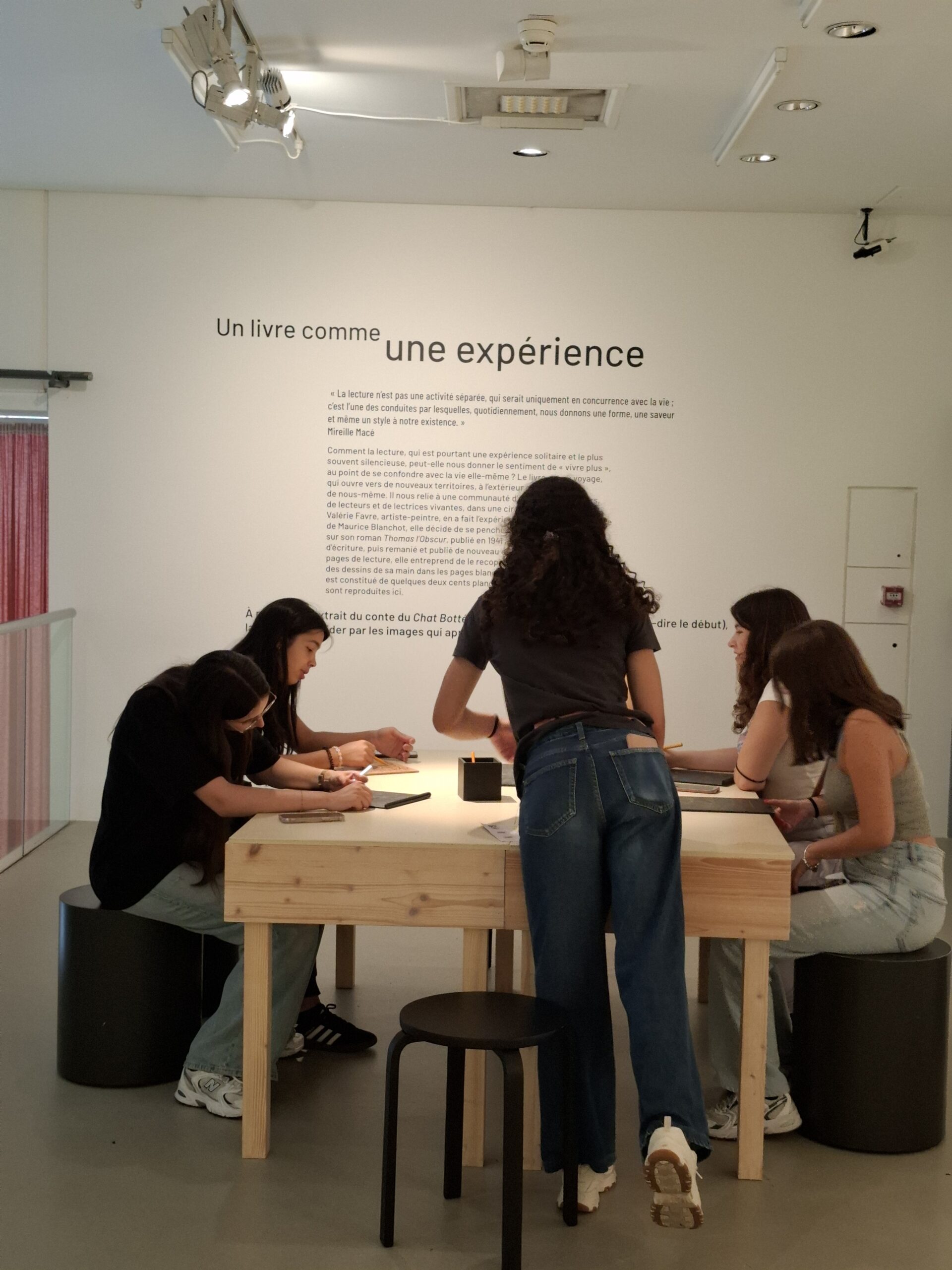
In the afternoon, we visited the Museum of Modern and Contemporary Art. There, we contemplate various works of art from different genres, such as Impressionism and Abstractionism. We also had the chance to connect with the art, including pieces by French artists such as Claude Monet and Renoir, amoung others. Besides, we also made art! We had the opportunity to paint and draw and create our own masterpieces.
At the end of the day, we took a train to Munich and headed off on a new adventure.