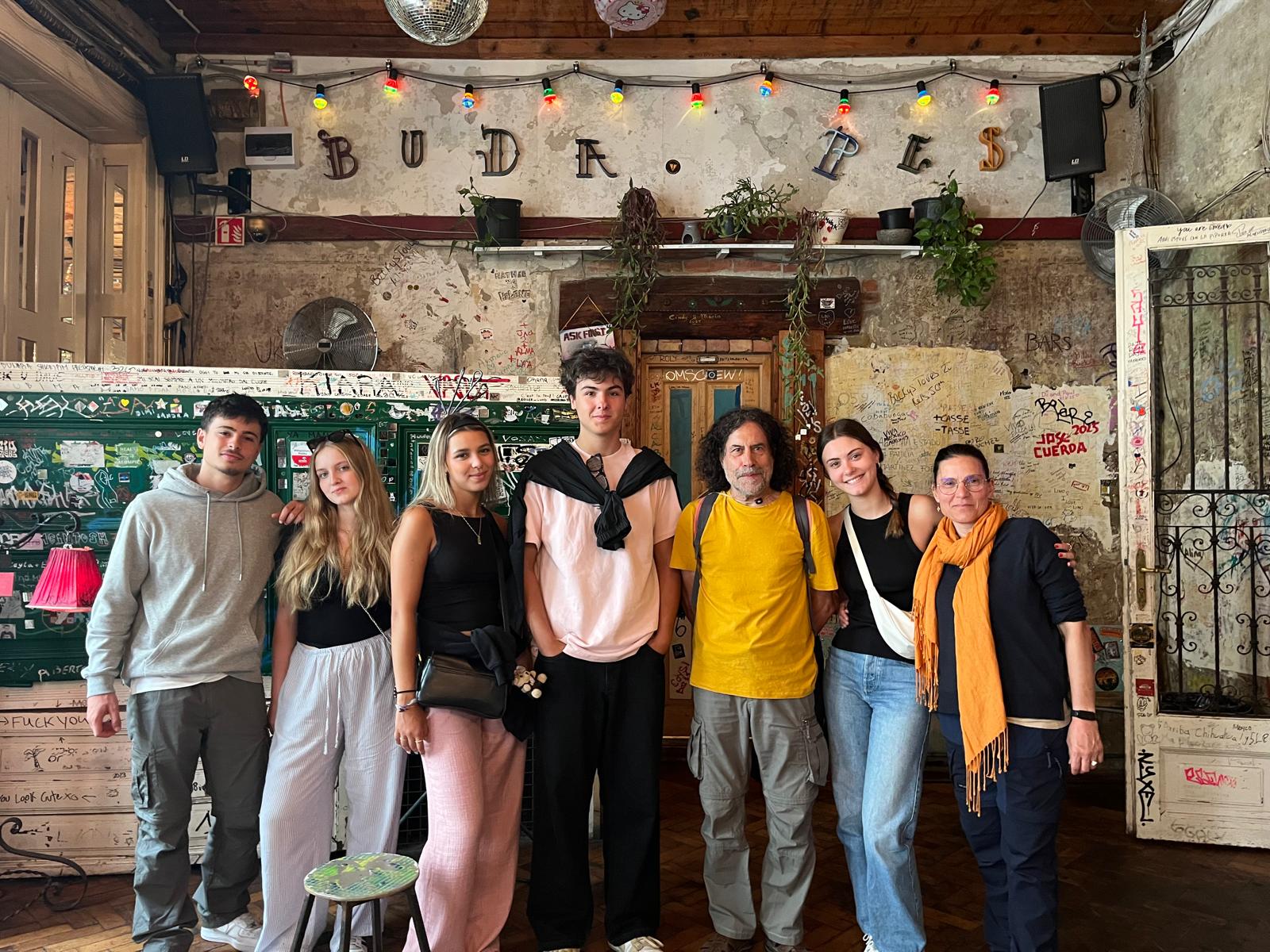
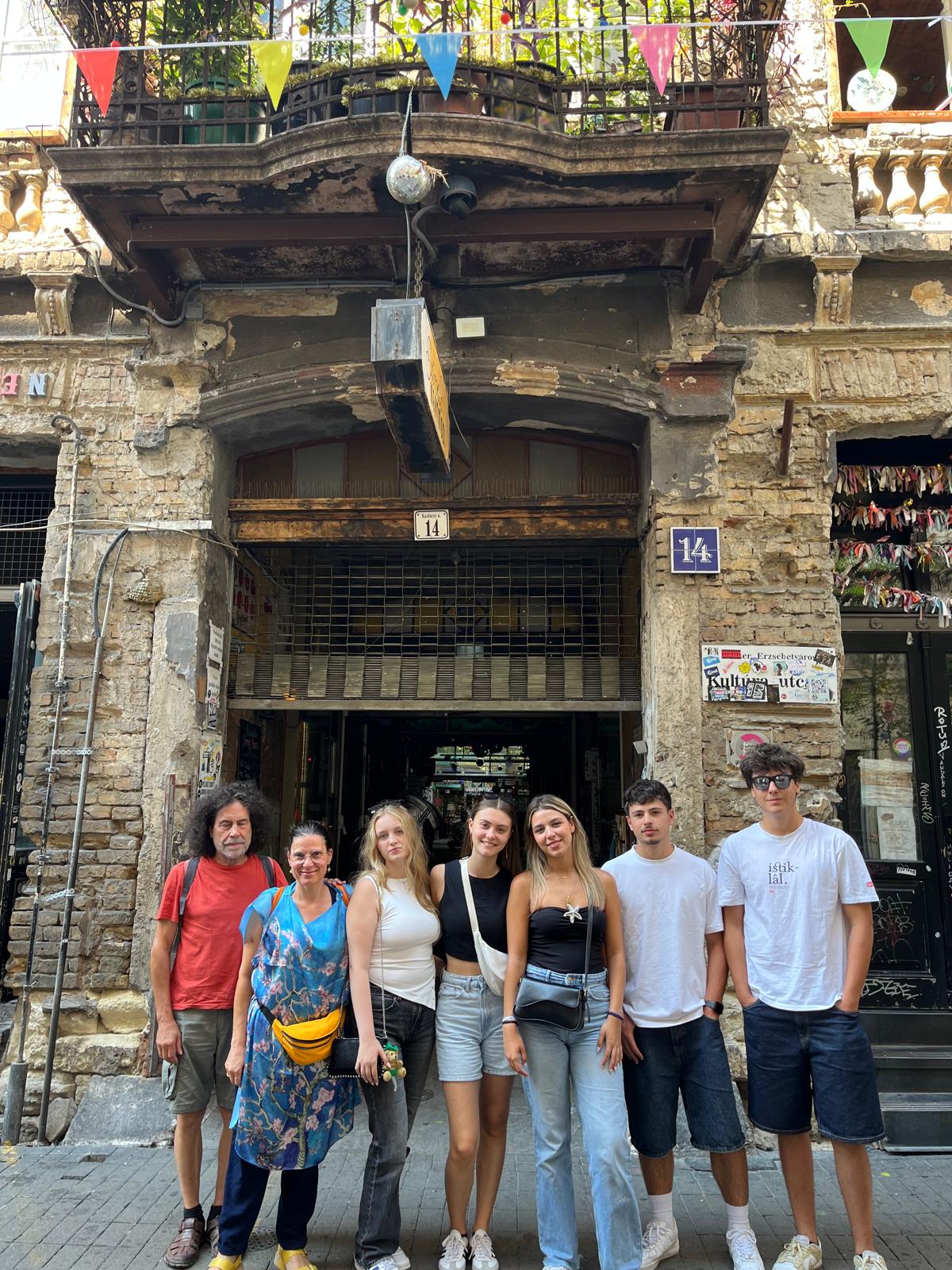
Explore the city of Budapest, where charm, exuberance, and history build a territory marked by resilience and the need for functional changes in urban space, resulting in results that combine various eras marked by distinct values, reminding us of what democracy, inclusion, and sustainable choices mean, as the goal of any responsible and informed consumer. This is the goal of a stroll through Budapest’s various streets, especially towards the “Budapest Ruins,” a typical neighborhood, where we find an ecological market and a fantastic example of sustainable urban restructuring. Budapest pioneered the use of war ruins to rebuild original buildings, clearly leveraging existing materials, transforming historic remains into a way of being and building the city. The world’s first pub in a building damaged by the war opened in 2004 and is also the most popular in Budapest. Szimpla Kert occupies a building from the original ruins of World War II, transformed into an extraordinary space. Popular both day and night, Szimpla offers a wide variety of daytime activities, such as a Sunday morning market selling small farmers’ and artisans’ products and, occasionally, a vintage clothing market. In the early 2000s, the interior of District 7 was filled with abandoned buildings, factories, warehouses, and shops. It was also formerly the site of the Jewish ghetto, and the historic neighborhood fell into ruins in the decades following World War II, following the deportation of approximately ten thousand Jews to Nazi death camps.