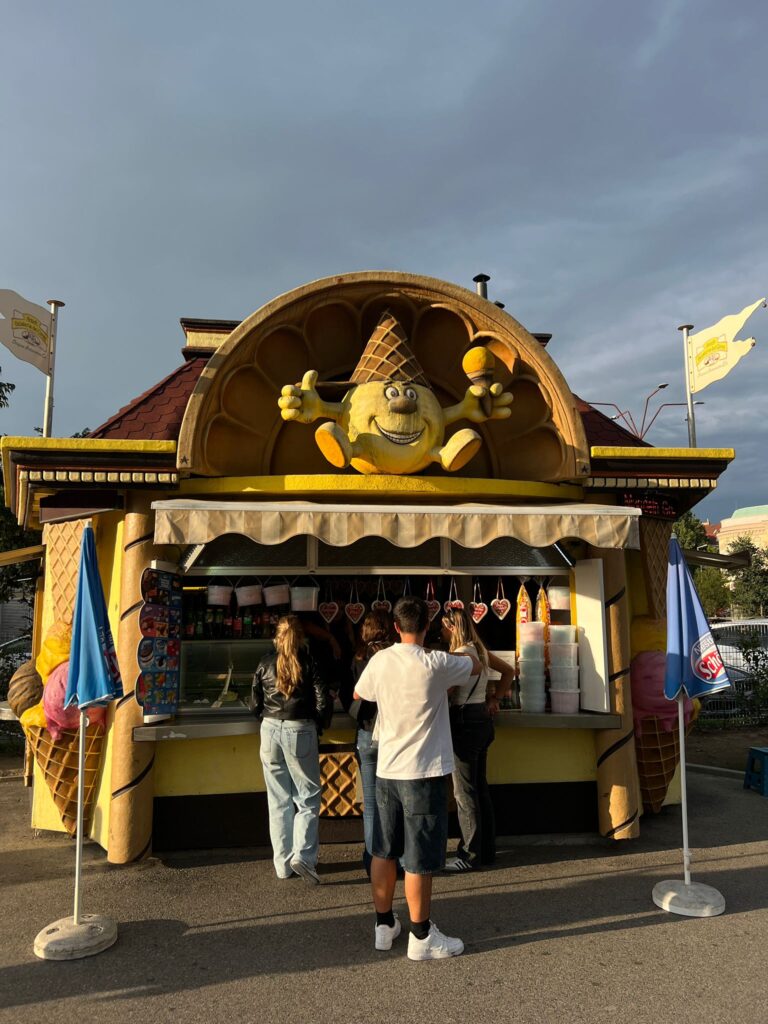
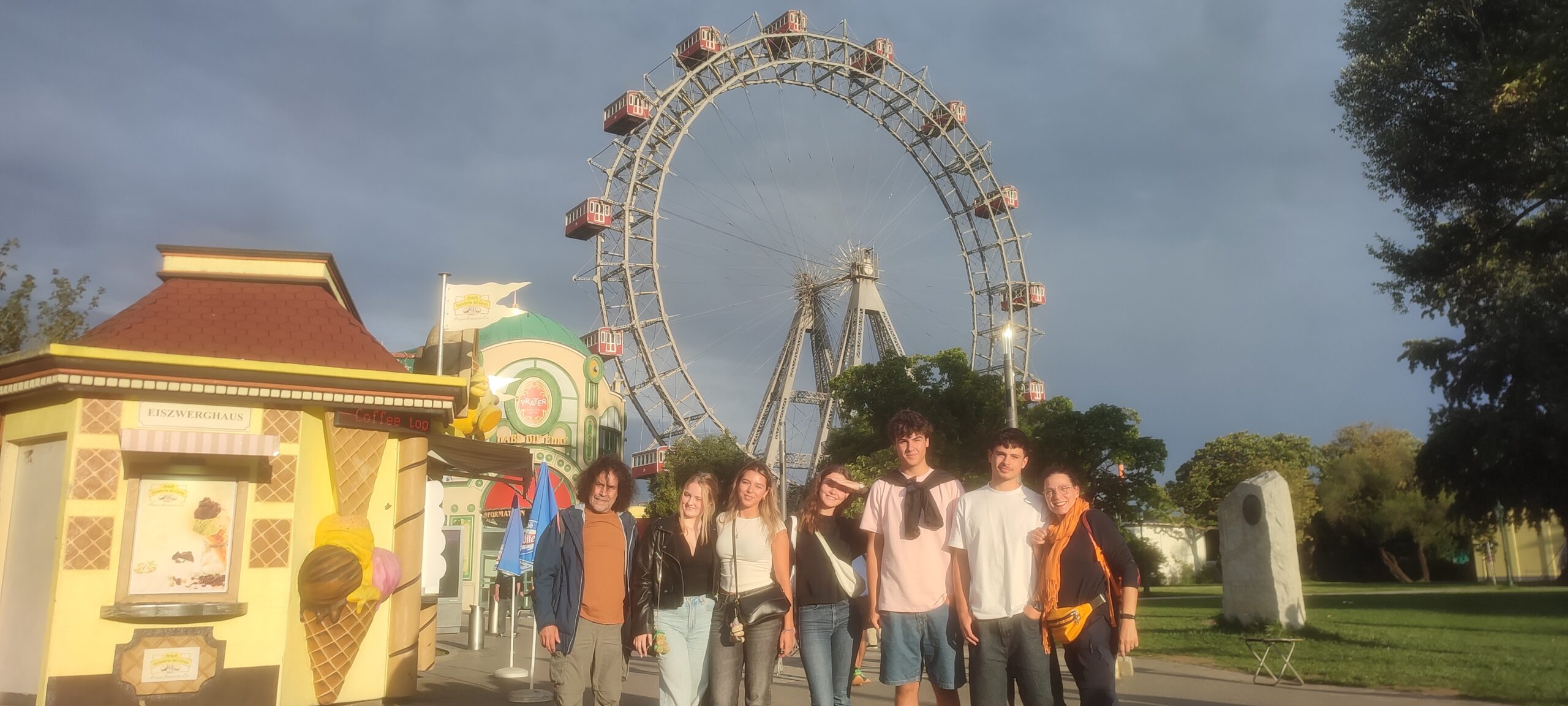
Today, July 29, 2025, our train journey continued, this time heading to Vienna, to explore and learn how different cities in Europe present sustainable solutions that embrace the various dimensions of sustainability. The city of Vienna is like a vast garden, and offers unique examples of how spaces can be transformed into strategically inclusive, democratic, environmentally educational territories, and promote the responsible use of new technologies. We visited the “Hundertwasser Village,” a complex of irregular buildings designed to be sustainable and in harmony with nature. The Village was built according to concepts by artist Friedensreich Hundertwasser during 1990 and 1991. The building was once used as a car tire factory and, after renovation, is a must-see for the irreverent and symbolic architecture and philosophy that combines the social well-being of a community with respect for nature. This residential building was commissioned by the City of Vienna to create a public housing project that broke free from the rigid norms of conventional architecture, and today it is a symbol of Vienna’s commitment to innovative and sustainable architecture. Donauinsel, “Prater Park,” the oldest amusement park in the world, was also part of the itinerary. Throughout its history, the Ferris wheel has survived major natural disasters and war conflicts. It was during the final days of World War II, in 1945, that bombings and fire destroyed much of the wheel. The cabins that could not be salvaged are now housed in the underside of the Ferris wheel, serving as an exhibition through which visitors can travel through different eras of the past. The entire park is an adventure, and some rides challenge only the bravest. An example of the resilience and emotional intelligence of a region that transforms rubble into a space for leisure, education, and the promotion of an inclusive identity, an example of the sustainable reuse of structures.