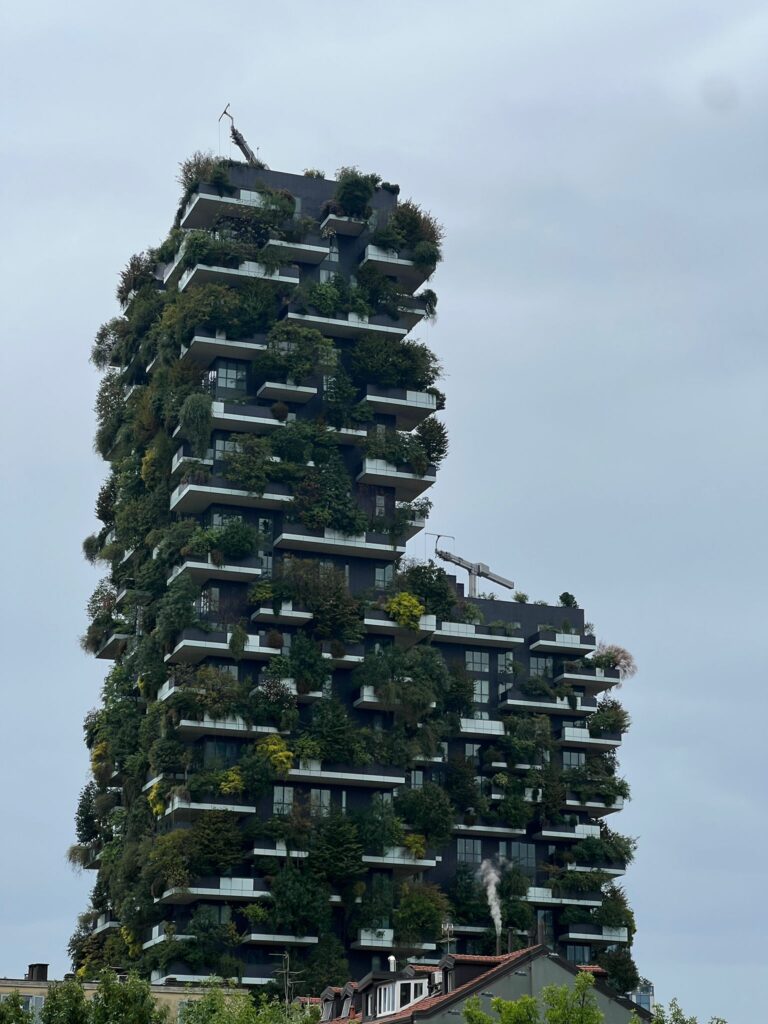
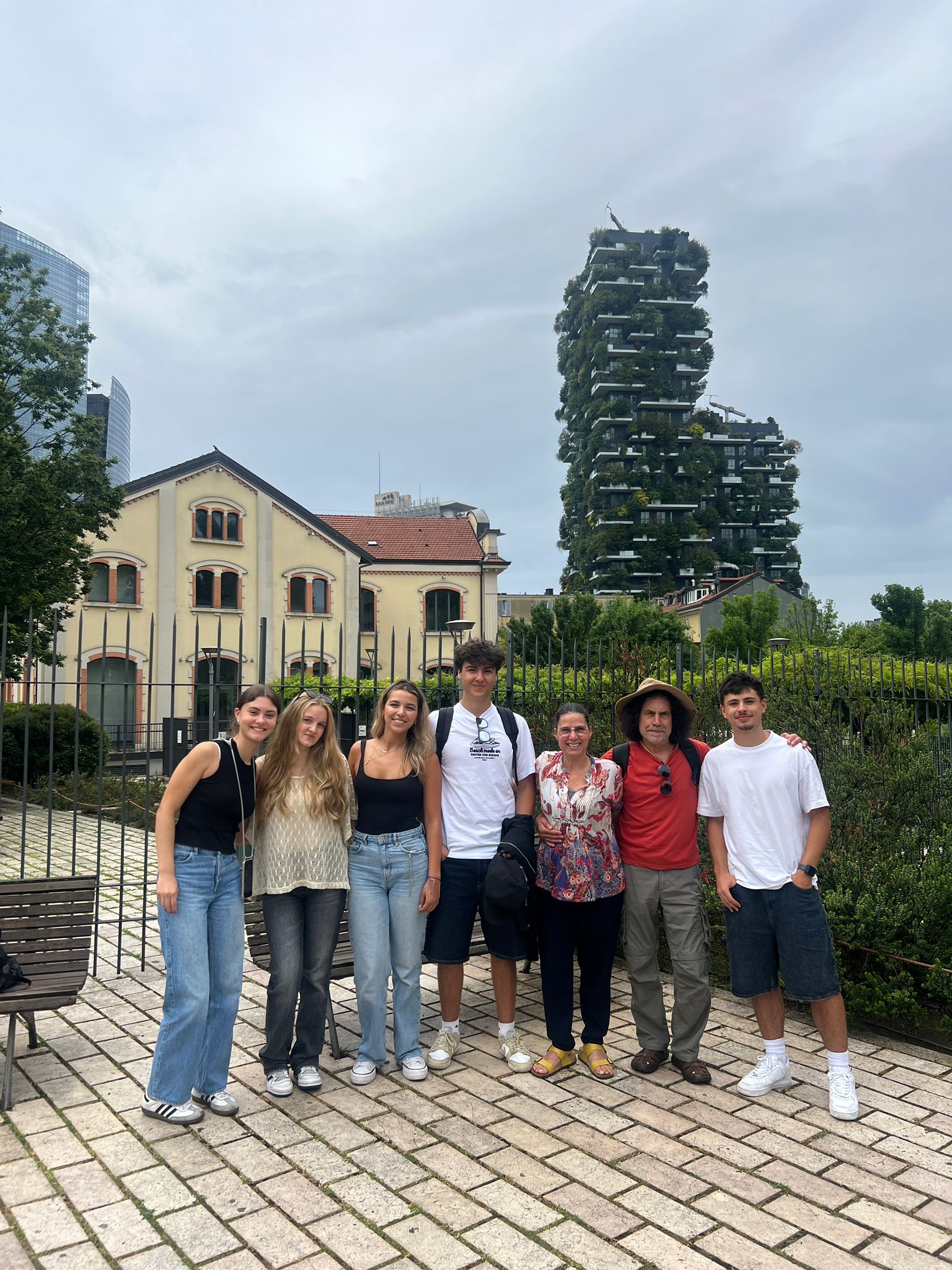
The day begins early to see how new architectural projects are being designed to transform buildings and vacant land into successful strategies for territorial sustainability, such as the “Bosco Verticale,” a remarkable example of sustainable solutions in architecture. The project consists of two residential towers adorned with over 900 trees and 20,000 plants, creating a microclimate that improves air quality and reduces noise pollution. Furthermore, the building incorporates clean energy systems, both wind and solar, and reuses rainwater and graywater for irrigation. The “Porta Nuova” district, a former disused railway yard, is a good example of an urban regeneration and urban renewal project in Milan, Italy, a city known for its modern skyscrapers and green spaces. Meanwhile, “Sempione Park” represents the restoration of a space and its integration with nature. Built on an ancient, neglected structure, the Grand Canal, it offers a large green area, providing environmental and recreational benefits to the city. Despite being a densely industrialized area, Milan promotes and encourages the implementation of environmentally friendly territorial and architectural strategies, demonstrating that it is possible, in the same space, for modernity and antiquity to coexist in an interesting symbiosis.